At the beginning of the 2025-2026 fall semester, Shawnee State University quietly launched a pilot teaching assistant program. This program was intended to provide aid and insight to both the professors teaching the classes and the students taking the classes. It was also conceived to create a more welcoming environment for students. The thought behind the program was that interacting in class with someone they can relate to would provide easier communication and more open discussion among students.
Of course, being a pilot, this program did not come without its ups and downs. The instructors and teaching assistants involved both struggled and thrived at different points in the semester. However, there are hopes that this initial launch will guide improvements to continue the program in the future.
Christy Zempter is one of the professors who took part in this program. She is an assistant professor of communication and the director of the Teaching and Learning Center at Shawnee, which is where she began the conversation about the teaching assistant program.
“I was having conversations with faculty around campus about how helpful it can be to bring in juniors and seniors to talk to students who are maybe coming up to some kind of critical point in the program,” Zempter said. “Specifically, I was talking to someone from teacher education who was talking about a practice they had of bringing back students who had taken specific subjects, specific tests that you have to take to get your licensure as an educator.”
According to the faculty member that Zempter spoke to, the performance of students on those tests improved significantly once they started bringing back students who had already taken the tests.
“I talked to Dr. [Andrew] Napper and some other folks about what that might look like if we built something like that in our first-year classes, and he’s one of the people who was really excited about it.”
Before his participation in this program, Napper, a professor of chemistry, was involved in tutoring through a walk-in chemistry lab a few years ago. Originally, multiple chemistry majors were employed in the lab, and two students would work 40 hours a week for open tutoring. However, students didn’t take advantage of the opportunity very often, so they cut hours down to eight a week before the program was cut entirely. So, when Zempter brought up the idea of the teaching assistant program, Napper was eager to join.
The program was projected to provide many benefits to students in classes with upper-level teaching assistants.
“We’d like to see better retention, so, students staying at the university and in the program[s],” Zempter said. She also noted some other desired outcomes, such as students feeling part of a larger community and academic success in future major-specific classes.
At the beginning of the semester, Napper and Isabelle Sarver, Napper’s teaching assistant, said they struggled with engagement. Similar to the first open chemistry tutoring, students simply did not come in to speak with Sarver when she was available.
“I’ve had many emails of people wanting to meet with me, but they don’t want to go past that,” Sarver said. “They don’t want to actually set up times. I even opened up to doing Zoom meetings with students over the weekend.”
Sarver would utilize one of the study spaces on the third floor as an open, walk-in tutoring space, but received few visitors. Three weeks into the semester, Sarver and Napper reconvened to discuss different options.
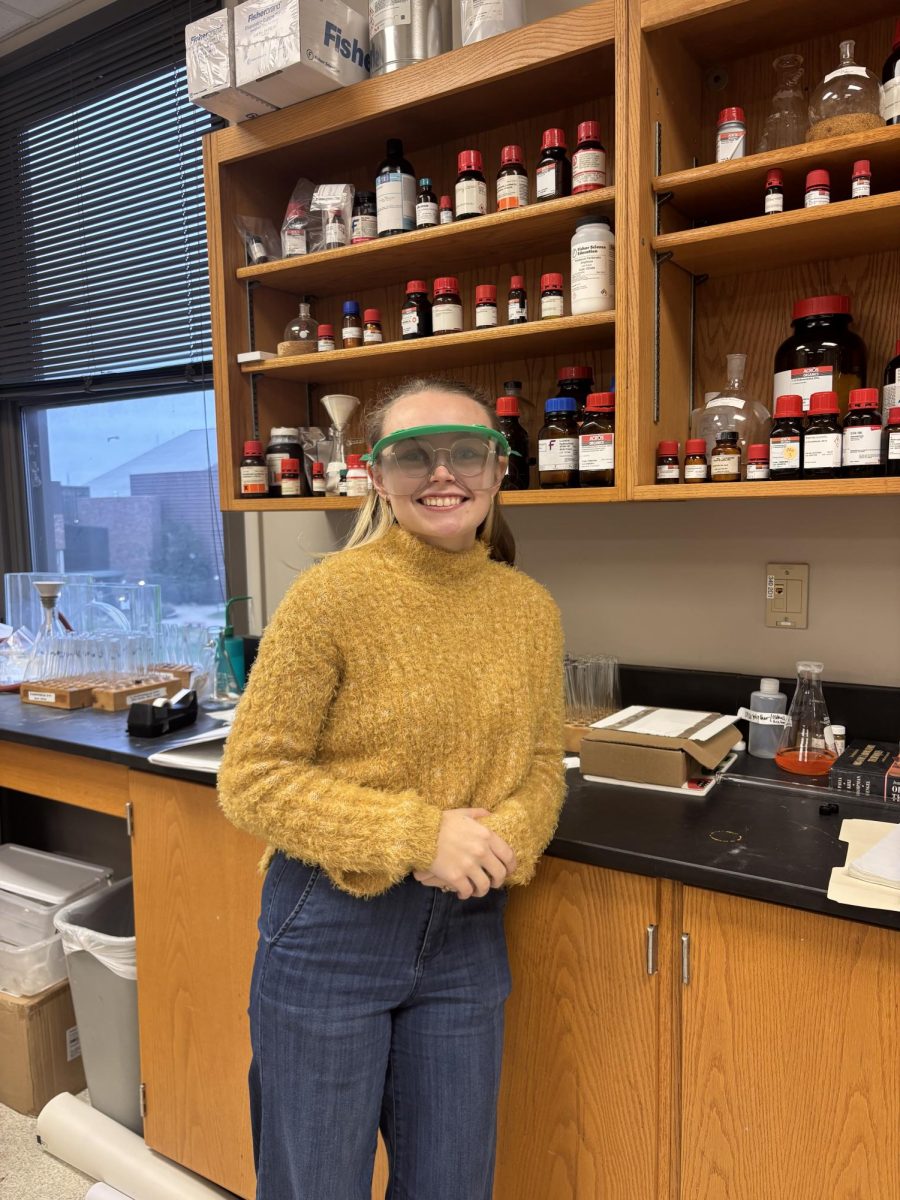
“We came up with the idea to embed Isabelle in lab, so she’d wander around in lab and talk to the students, and I think that’s really been wonderful,” said Napper.
“By seeing me there in more of an open communication area, they’re more prone to actually talk to me and ask questions, and even just ask questions about the major,” Sarver said. She went from sitting in an open tutoring lab to working firsthand with first-year students in chemistry lab classes, originally to assist with assignments. Her help extended beyond just classwork when students began to ask deeper questions about the major and its different tracks.
“I have been able to help students with advising and scheduling classes,” she said. “I’ve been able to help the other chemistry majors, telling them what classes to take and when.”
Sarver explained that she was able to point many students to the degree-planning paper located in one of the third-floor hallways, as many students didn’t know about them. She became not only a teaching assistant, but also an advisor for students exploring the chemistry program.
Overall, the program went very well for Napper and Sarver. While in labs, Sarver was able to help answer questions about the class, about the major in general, and could help students better understand problems by working them out together, which better prepared students for the comprehensive final at the end of the semester.
With the semester coming to a close, everyone involved in the pilot program expressed a similar wish for the future – expansion and refinement.
“There’s not a one-size-fits-all, but I hope that we can learn from each other on general practices and strategies that work better than others,” Zempter said.
Napper agreed, adding, “We’ll just build off of what we did right and wrong, and hopefully get a little bit better every time.”