The music hasn’t started yet, but Elayna Kingsolver can already feel the familiar rush building in her chest. Backstage, nerves peak as teammates adjust bows, smooth uniforms and quietly count through routines. Kingsolver stands among them, still and focused, her mind running through every stunt, every motion and every count she’s practiced over and over again.
In a few moments, she’ll step onto the mat. And for one of the last times, it will all be real. The nerves, she said, feel the same as they did when she first performed as a child. “I remember it being the scariest thing I had ever done,” Kingsolver said. “But I loved the adrenaline.” That feeling kept her coming back.
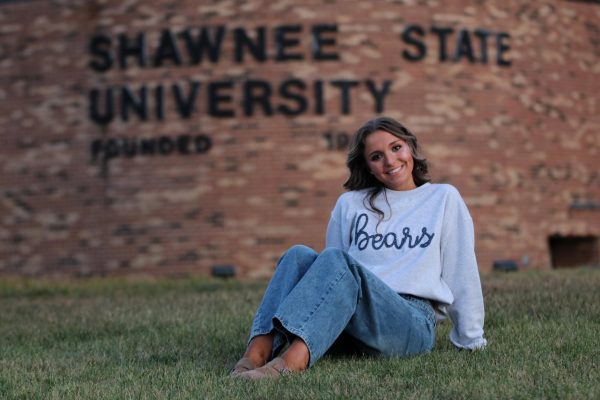
Kingsolver began cheerleading at age 4 after her mother signed her up. What started as a childhood activity quickly became something more. She said she was drawn to the challenge of learning and perfecting new skills.
“I felt like I always had something to work for,” she said.
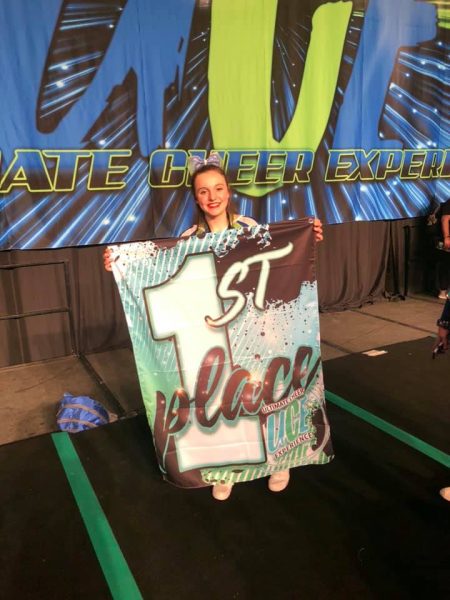
Over the years, that mindset became part of her identity. Practices were long and repetitive, especially when she was younger, but they built the foundation for everything that followed. By high school, she was practicing constantly—sometimes every day—learning how to balance a demanding schedule while pushing herself physically and mentally. Now, she is finishing her senior year as a cheerleader at Shawnee State University.
“Cheer has definitely given me a good work ethic,” she said. “And the ability to manage a busy life.”
That work ethic didn’t come without challenges.
While she never suffered a major injury, Kingsolver dealt with recurring setbacks, including sprained ankles and ongoing hip tendonitis. Even then, she kept going—like so many athletes do—working through the pain and staying committed to her team. Through it all, certain moments made everything worth it.
Her senior year brought one she’ll never forget: winning the Cheersport competition in Atlanta, one of the largest cheer competitions in the country. For Kingsolver, it wasn’t just a victory—it was a defining moment after years of dedication.
But behind athletes like Kingsolver is a coach who sees the full picture—both the struggles and the potential.
For Shawnee State University coach Michelle Boldman, cheerleading has always been more than just a sport. Growing up, she watched her older sisters cheer, amazed and consumed by the sport instantly.
“It lit an internal flame,” Boldman said. “Like fireworks on the Fourth of July.”
Now, after about a decade of coaching, she recognizes that same spark in her athletes. She’s also seen firsthand how much the sport demands—something she believes is often overlooked.

“These athletes work just as hard, if not harder, than other sports,” she said. “Not only do they have elite-level skills, but they have to execute everything as a team.”
That team dynamic is what makes cheer unique. Every athlete has a role, and there are no substitutions. If one person misses, the entire routine can fall apart.
“Everyone has to hit,” Boldman said. “If you’re winded, you lose counts. If you’re winded, you get sloppy—and that becomes a safety issue.”
That level of difficulty is something people outside the sport don’t always understand. Anna Brown, a student broadcaster for Shawnee State University’s basketball livestream, said her perception of cheerleading has changed over time as she’s seen more of what athletes actually do.

“With time, my respect for the sport of cheer has grown,” Brown said.
She said her early understanding of cheerleading was limited, shaped by less demanding programs she had seen growing up. That perspective shifted as she became more exposed to the athleticism required.
“It wasn’t until I saw more developed cheer teams that I realized there was more to it than clapping your hands together and shouting,” she said.
Brown said many of the misconceptions surrounding cheerleading come from stereotypes and a lack of awareness about what the role actually involves.
“For instance, there has always been a stereotype about cheerleaders seeming ‘ditzy’ or ‘unaware,’” she said. “This is an incredibly harmful stereotype and incredibly misleading.”
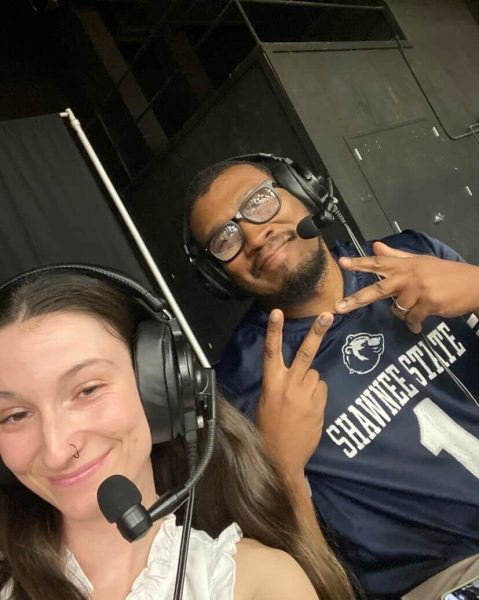
She added that cheerleaders must stay engaged with the game while performing, requiring both awareness and precision.
“This requires, at minimum, a basic understanding of each sport that cheer team cheers for,” she said.
Beyond that, she emphasized the physical and performance demands that often go unnoticed.
“The cheer movements are sharp, and it takes a lot of practice to ensure everyone is hitting their moves exactly aligned with each other,” Brown said. “It takes a ton of practice and athletic ability.”
At the same time, cheerleaders are expected to interact with fans and maintain energy throughout games.
“Combine dealing with the general public with exerting physical ability and you have a task that most regular people cannot do with ease,” she said. “But it’s the job of the cheerleader to make that task look effortless.”
It’s that combination of physical endurance, mental focus and trust that defines the sport—something Kingsolver has experienced throughout her entire career. And for coaches, the pressure is just as real.
Right before a performance, Boldman describes the feeling as overwhelming and electric.
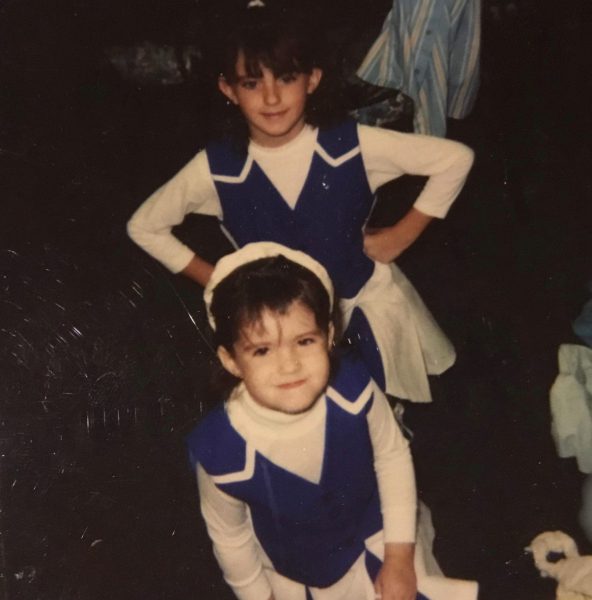
“It’s that chest rattle, lump in your throat, heartbeat in your ears sensation,” she said. “It’s like everything slows down.”
Then comes the moment of truth—when the routine begins and everything either comes together or falls apart.
“When I know they’ve hit,” she said, “it’s those same fireworks from when I was a kid.”
Those are the moments both athletes and coaches chase.
But for Boldman, some of the most meaningful moments don’t come from winning—they come from watching athletes believe in themselves. She recalls one routine she rebuilt overnight after her team had been struggling with injuries and doubt. The next day, they performed it for the first time.
“They went out there like they had done it 100 times,” she said. “That was a turning moment for them.”
It’s that growth—the mental and emotional side of the sport—that leaves a lasting impact.
For Kingsolver, cheerleading has been exactly that.
It’s given her friendships, memories and lessons that extend far beyond the mat. It’s taught her discipline, perseverance and how to keep going even when things feel overwhelming.
“Cheerleading means so much to me,” she said. “It has been a huge part of my life.”
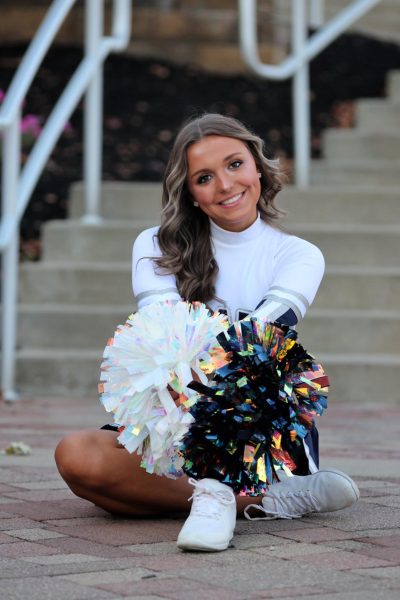
Now, as her senior season comes to a close, each performance carries a little more weight.
When the music finally starts, she takes a breath, steps forward and runs onto the mat—into the lights, the noise and the adrenaline she’s loved since she was four years old.
Only this time, she knows it won’t last forever. Her bows, worn cheer shoes and trophies will become embodiments of the memories she’s made.
And that’s what makes it matter most.