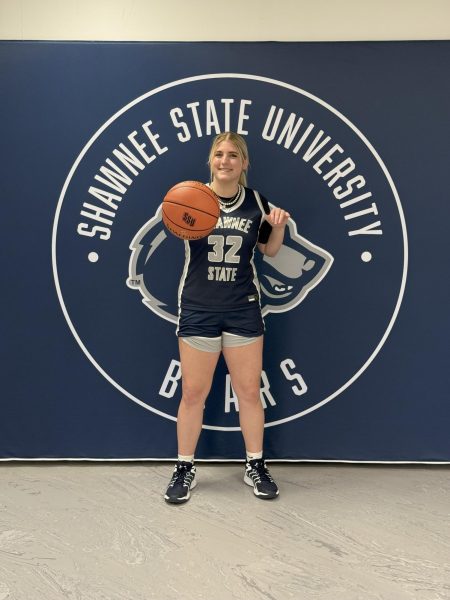
There is a certain way athletes imagine their final season.
For Lauren Hawthorne, it was supposed to be about leadership. About finishing what she started. About one last run with a team at Shawnee State University that she believed could go further than most.
“I was excited,” Hawthorne said. “We had a group that could go really far, and I wanted to be a leader for them.”
She had spent years building toward that moment, toward being the senior others leaned on, the player who helped carry a team through the hardest parts of a season.
But seasons do not always end the way they are imagined.
Sometimes, they stop.
It happened in the middle of a game, in a moment that did not feel important until it was.
Hawthorne’s feet were taken out from underneath her. She fell backward, hitting her head on the court. There was no dramatic pause, no warning that this would be the last time she would step onto the floor as a player.
And in some ways, there wasn’t even a memory.
“I don’t remember a lot from when it happened” she said.
But what she does remember is the feeling that followed. The realization, heavy and immediate, that something had been taken from her.
“The first thing going through my mind was that this was going to be my last time on the court,” she said.
The diagnosis confirmed it: a season-ending concussion.
Just like that, the season she had waited for was no longer hers to play.
In the days after, the game felt distant.
Hawthorne spoke first with her mother, then with the teammates she was closest to. The conversations were filled with support, but also with the quiet understanding that something had changed permanently.
The hardest part wasn’t just the injury itself, it was everything that came after.
“It was hard to watch” she said. “Not being able to be out there with them.”
And yet, she kept watching.
From the sideline, from the bench, from a place she never expected to be, Hawthorne saw her team continue to rise. The group she believed in pushed forward, eventually reaching the Sweet 16 of the NAIA tournaments.
It was the kind of run she had imagined being part of.
Instead, she witnessed it.
“I was so proud of them,” she said. “They kept going and performing at such a high level.”
Even as her role changed, Hawthorne did not disappear from the team.
She showed up to practices. She stayed engaged. She found ways to lead without stepping on the court.
Teammate Kyla Shae said that was nothing new.
“She was always someone we could go to,” Shae said. “She helped with plays, with anything on the court. But people don’t always see what she did behind closed doors, helping with team situations and being a leader.”
After the injury, that presence didn’t go away.
“She was still at practice, still supporting us,” Shae said.
In some ways, the leadership Hawthorne wanted to show during her senior season didn’t end with her injury; it just looked different.
Off the court, the support around her grew even stronger.
Her teammates checked in constantly, helping her through daily tasks while she dealt with the effects of her concussion. Her family, while upset for her, stayed steady in their support.
And slowly, the way Hawthorne saw herself began to shift.
“This experience taught me that I’m more than just a sport,” she said. “There are bigger things in life.”
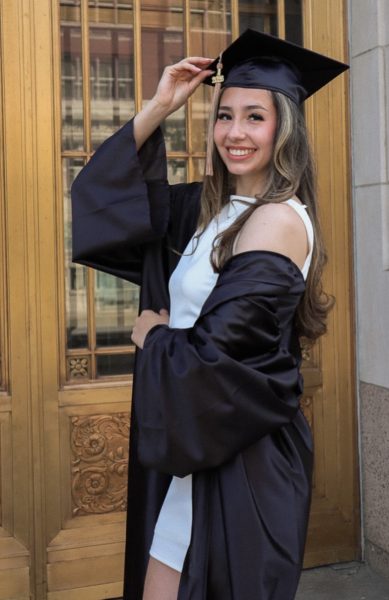
For Hawthorne, those bigger things now include pursuing a law degree and building a future that extends beyond basketball.
Still, the game has not completely left her.
Her season did not end the way she planned. It did not give her the final moments she had imagined.
Instead, it gave her something harder to understand, and maybe more important.
“I know it’s time to move on,” she said.
The season stopped.
But for Lauren Hawthorne, the story didn’t.