“There is one fairly niche fear I have. I know it’ll never happen, but I think about it a lot. I’m afraid of a water bottle (or some other drink), rolling under the brake pedal in the car and preventing the car from being able to stop.” This rather specific fear belongs to Kate Pitts, an SSU student and avid horror consumer, at least in her childhood. She explained this fear developed after watching the 2003 “Final Destination 2” movie, where this exact scenario occurs and results in a gruesome death for multiple individuals, as most situations in that franchise do.
There are even multiple articles online and posts on social media where people describe how these same movies, as well as other horror and thriller content, have caused them to become more fearful of “one-in-a-million” chance scenarios. This phenomenon is not limited to fiction, either—many individuals find that in consuming too much true crime or news on tragedies, their perception of actual crime rates or “freak accident” statistics become warped. It can be explained, in part, by “cultivation theory.”
According to SSU communication professor Christy Zempter, cultivation theory was developed by George Gerbner in the late 1960s. Gerbner argued that “our media consumption influences our beliefs about the world around us.” At the time the theory was first developing, Zempter explained that “television was becoming ubiquitous,” with many households owning a television set. With the increasingly common trait of owning a television, Zempter explains that the aired programs “were becoming more central to our collective culture.” Originally, the theory focused on television specifically, but some researchers today are exploring how this applies to today’s digital age and media landscape, while others “argue that our contemporary consumption habits don’t allow for the broad socialization patterns Gerbner predicted.”
When asked whether cultivation theory refers to negative perceptions alone, or if there are also “positive” aspects of it, Zempter stated that Gerbner’s focus was mainly on the negative effects. He coined the term “mean world syndrome” to describe people who heavily consumed television. Zempter also explained that the concept of cultivation theory was “grounded in the idea that violence was overrepresented on television,” both in news and entertainment programs. Though more recently a growing number of studies have investigated the possible positive effects rather than the initial focus of primarily the negatives.
Zempter also mentioned that it is “important to acknowledge that there is considerable criticism of cultivation theory among mass communication scholars.” Many of these critiques come from the changes in technology and media consumption over the many years since cultivation theory was first introduced, especially in today’s digital age; society went from watching a handful of the same channels at certain times to being able to watch anything at any time.
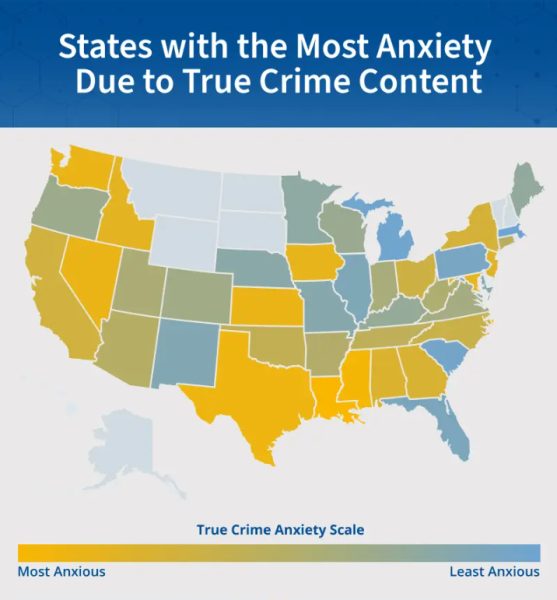
Though, the negatives of this theory can be especially true in cases where the consumer may be more anxious than others. Camryn Pierson, who is an SSU student, mentioned not having any irrational fears of her own, stating, “I don’t think that I have irrational fears because I don’t consume content that would give me those kinds of fears.” She described herself as an anxious person, and that in knowing this about herself, she chooses what she consumes carefully so as to not cause herself to become upset or directly warp her view on the world, stating her personal belief that “…the content you consume makes you look at the world differently.” Gerbner would certainly agree with this, seeing that it was what his theory claimed. Additionally, Camryn mentioned previous struggles caused by the plethora of true crime content she used to consume, claiming that it made her “fearful and scared of the world.”
However, this does not imply “mean world syndrome” is unavoidable and something that will consume us all. According to Zempter, a suggestion that Gerbner would have likely made was to limit one’s television viewing. Which, in today’s world, would likely translate to limiting one’s technology usage/media consumption. Zempter’s own advice for keeping oneself from becoming too affected by the content they consume is by taking regular “detoxes” from most or all forms of media, such as social media, gaming and of course, television. She also suggested that individuals engage and interact with their environments and the people around them intentionally and more directly, consistently. As a third, final word of advice, she also recommended broadening the type of content an individual may seek out: “Even if you don’t end up adopting different beliefs, exposure to other ideas can help you think more critically about things you might take for granted.”