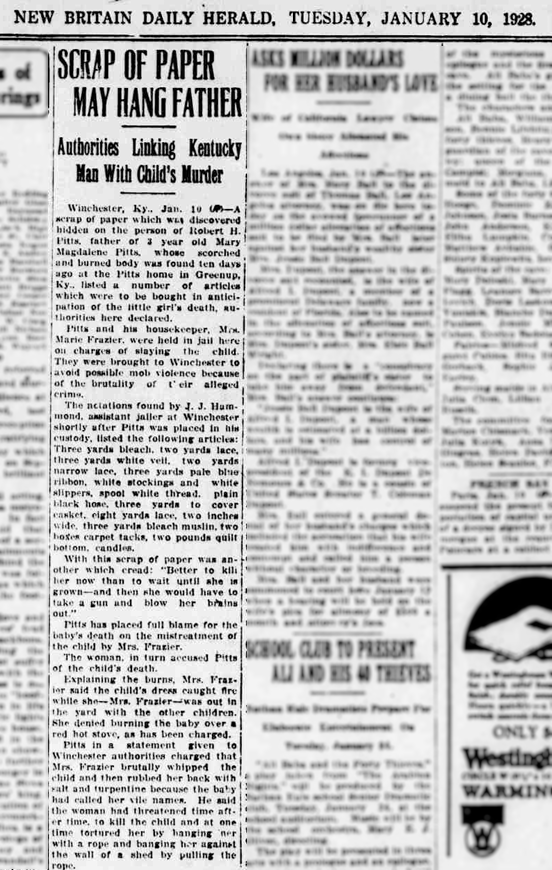
Upon a scrap of paper is a list: “three yards muslin, two yards lace, three yards white veil, three yards pale blue ribbon, white stockings and white slippers, spool white thread, plain black hose, three yards to cover casket, eight yards lace two inches wide, three yards bleach muslin, two boxes carpet tacks, two pounds quilt bottom and candles.”
It reads exactly as it should- like a shopping list. Yet its context is entirely changed by a second scrap of paper discovered alongside it that reads, “Better to kill her now than to wait until she is grown- and when she would have to take a gun and blow her brains out.”
The notes were found in January of 1928, in the possession of Robert Pitts as he was transferred to authorities in Winchester, Kentucky, where he would be held on charges of murdering his 3-year-old daughter, Mary Magdalene Pitts. Initially, Pitts was arrested in Greenup County where the crime was committed, but threats of violence incited a move to another district. However, the threats did not derive from Pitts himself, but rather from the people of Greenup, who were both appalled and enraged by the tragedy. Local authorities feared mob violence, and Pitts had to be moved for his own safety.
Today, nearly a century after the murder of Mary Magdalene, locals are both moved and disturbed by the memory of her short life. Some may remember the moment they learned about the horrific crime and the way it shifted the image they held dear of their quaint, quiet county, while others worry the tragedy will be lost to time.
John and Nancy Wright Bays of Lloyd, Kentucky, are two historians for Greenup who have lived inside the county their whole lives. They say Mary’s story is not known to many locals today.
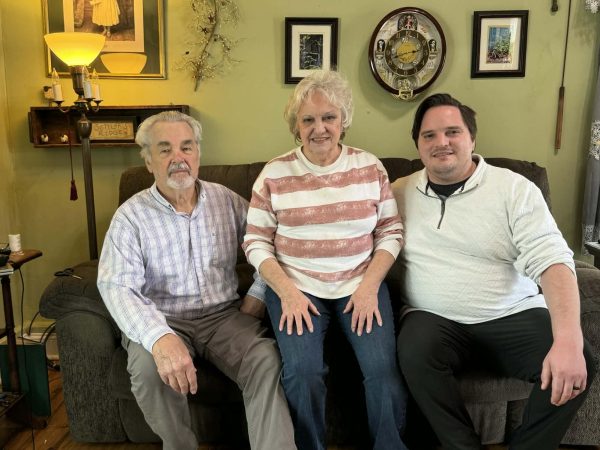
Nancy reflected quietly on Mary for a moment with a hand over her heart, then said, “It makes me sad and want to cry. That child should not be forgotten.”
Their grandson, also named John Bays, has grown up inside Greenup all his life. He remarked that he did not know much about the details of her case, but that he knew it was “really bad.”
“Perhaps,” he suggested, “It’s because I didn’t really want to know how bad it actually was.”
“She’d been beaten and burnt,” Nancy said then, speaking in soft reverence for the young girl, “And some people knew she’d been abused before but did nothing to help her.” Her expression turned sour with a shake of her head. She was deeply disappointed; not in Mary, of course, but in both those who failed her and the era when it was far more common to look away from private matters of the household than to extend a helping hand.
John, Nancy’s husband, quietly slipped away while she was speaking, then returned with a booklet: “Another Time and Place: The Story of Mary Magdalene Pitts” by Marmon Richards and David P. Spencer. The story was taken from the 1937 edition of True Detective Mysteries, a magazine published from 1924 to 1995, and reprinted as a booklet to raise funds for maintenance of Mary’s gravesite.
At the time of its original printing, Richards was commissioned by the magazine to report on the facts in Mary’s case. When he finished his research, he began the article by declaring,
“I have just completed a personal investigation of the most shocking, blood-stirring criminal case in the history of Kentucky. It was a crime so utterly heartless that time has failed to erase the memory of its stark cold-blooded horror.”
Nearly a century on, some details of Mary’s life and the journey to justice are difficult to ascertain. But with a collection of archived newspapers, records and resources provided by local historians, a timeline of events begins to take shape.
No record of a birth certificate could be found, but a death certificate cites Mary “Magdeline” Pitts’ date of birth as June 5, 1924, in “Minneaphe,” Kentucky. The coroner misspelled several items on the death certificate, including her birthplace, Menifee, and presumably her middle name, as well.
Mary’s mother, Lucy Walker Wilson, was not married to Mary’s father, Pitts. Her older siblings were from previous marriages.
When Mary was 3, her parents separated, and she moved with her father and siblings to Argillite in Greenup County.
While many articles state that Wilson left Pitts, The Cincinnati Enquirer reported on January 12, 1928, that Wilson refuted that claim and said, “I didn’t leave Robert H. Pitts, as has been stated, but he deserted me a year ago and took Mary Magdalene with him. I had repeatedly sent word to him that I wanted Mary, but he never answered.”
However, two days later, on Jan. 14, the same publication reported that “Pitts had compelled her to leave without the child, beating her and shooting near her.” The Paducah Sun reported the same.
There’s a similar account in The Public Ledger from Maysville, Kentucky, that states Wilson tried to leave with Mary, but Pitts “took the child’s clothing from the suitcase and demanded that she leave her with him.” Then, when she left the house the next day, he shot at her several times.
After fleeing with his children, Pitts began work at American Rolling Mill Company (ARMCO), a steel mill in the neighboring city of Ashland, and took on a housekeeper, Marie Frazier. Together, they lived in a cabin on Culp Creek, but the youngest Pitts child would not live to see the end of the year.
On Dec. 29, 1927, Mary was murdered. The cause of death is listed on her death certificate as “probably shock resulting from burns, bruises and cuts administered by father and housekeeper, Marie Frazier. Probably homicide.”
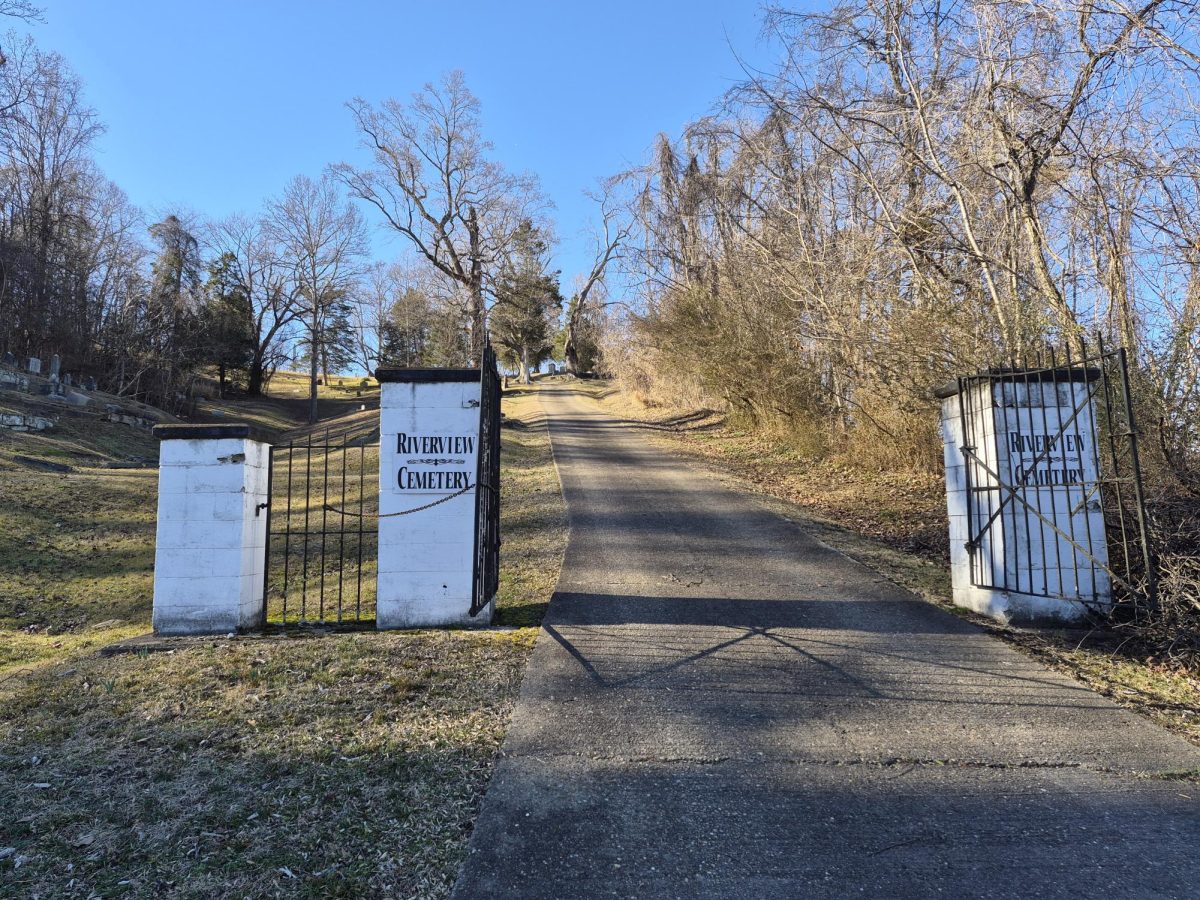
Thousands of people attended her viewing, which took place over two days between Jan. 5 and 6, 1928, before she was buried at Riverview Cemetery in Greenup on Jan. 15. A larger crowd had never before assembled in the town of only 900 people. Visitors trekked from Kentucky, West Virginia, Ohio, Tennessee, Virginia and Iowa to honor the memory of a 3-year-old child none of them had known in life. An exact total is difficult to pin down, but a report leading up to Mary’s viewing and burial describe droves of people arriving to Greenup County by the thousands.
During an examining trial on Jan. 6, 1928, several prominent witnesses came forward with testimony that would shed light on the terrible circumstances in which Mary was found.
Dr. H. T. Morris testified that a wound, unique in shape, was discovered on Mary’s head that matched the shape of a fire-poker possessed by the family, which came to be strongly associated as the instrument of her murder. It was after the discovery of the fire-poker that Pitts and Frazier were arrested.
A neighbor of the family, Mary Mullins, stated that Pitts said to her that he “punished (Mary) every way he could think of to break her of habits.”
Pitts’ daughter, Eva, said her father and housekeeper “often whipped Mary, using four and five switches in a bunch.” This statement was mirrored by testimony from two more siblings, brothers Herden and Hubert Pitts.
Desperate to avoid blame, vigilante justice and the electric chair, the pair quickly turned on each other, confessing to sordid descriptions of an already unimaginable crime. With each conflicting confession, they sought to exonerate themselves while pinning the blame squarely on the other.
On Jan. 9, one of many Pitts confessions was reported in The Brownsville Herald of Texas in which he alleged his child endured “a long course of torture.” He accused Frazier of holding Mary over a stove until her back was blistered, and then when the wounds were partially healed, she rubbed salt and turpentine into them. He said Frazier killed Mary because she “feared the child’s mother might return.”
Frazier, however, claimed that Pitts murdered his daughter “because he wants (Frazier) to hang.”
She also explained Mary’s burns as an accident; Mary’s dress had caught fire while she and the other children were outside. These claims appear in numerous publications.
While in jail, Pitts described an awful scene in which the housekeeper strung Mary up by rope in an attempt to kill her the Monday after Christmas. Pitts was able to stop her from killing Mary then, but she threatened to do it again sometime when he was gone from the home.
The Lexington Herald-Leader reported on Jan. 13 that Frazier said Pitts “hit his little daughter an awful lick on the head with a poker around 2 o’clock in the morning of the day she died.”
On Jan. 16, The Sioux City Journal in Iowa reported on another confession of Frazier’s wherein she claimed something entirely new. The other Pitts children had confided in her a chilling secret: They once had a 20-month-old brother, who one day left the home with their father and then never returned. This claim was never brought to court.
She still maintained that Pitts struck Mary in the head with a poker, killing her in the early morning hours of December 29, 1927.
In a counter to her accusations, Pitts claimed that Frazier “doped” him in order to make him complicit in a plan to murder Mary while he was at work.
Pitts and Frazier were tried separately in Vanceburg, Kentucky; the latter saw her day in court first on Wednesday, Feb. 29, 1928.
The courtroom was packed to capacity with curious onlookers, while thousands more yet lingered outside with vendors lining the streets, ready to provide to the gathering masses. The Paducah Sun described the town as having taken on “the appearance of a county fair.”
During Frazier’s trial, she was described as sullen, emotional and hysterical, while others saw her quietly wiping away tears. She was plagued by visions of the tiny golden-haired girl … battered, bruised and gone. Mary’s nightgown, covered in blood, was shown to the court, as well as photos of her wounds.
On Thursday, March 1, following the first day of court, Frazier decided against the advice of her counsel and pleaded guilty. She accepted a life term in the penitentiary and became a state witness against Pitts in exchange for avoiding the electric chair.
Pitts’ trial began on the following day, Friday, March 2. Now a state witness, Frazier maintained that he struck Mary over the head with the fire poker and further elaborated on the alleged beatings that took place.
She said Pitts was “known to beat (Mary) with a razor strop until he himself was exhausted and had to sit down on the floor to finish the punishment.”
When Pitts took the stand in his own defense, he denied all allegations against him. While he admitted that he neglected to call a doctor when he found his child dead, he maintained his innocence and blamed the murder on Frazier. Pitts, like Frazier, was sentenced to life in the penitentiary.
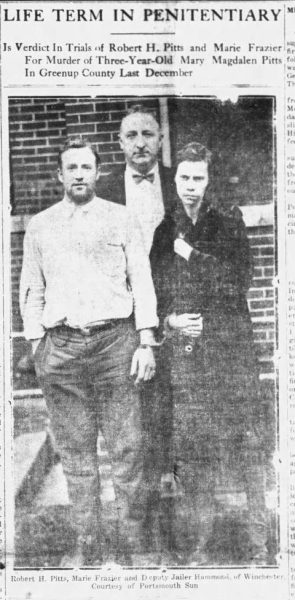
At the time, those serving life imprisonment could be paroled after eight years. Frazier was paroled in March of 1940 after serving nearly 12 years, whereafter she returned to Greenup County. Before becoming Pitts’ housekeeper, Frazier had two daughters of her own from a previous marriage, Nonie Mae and Eloise Wilson, who lived with her parents in Greenup. No record of Frazier’s death could be found by the time of this article’s publishing.
Pitts was paroled by 1942 after serving approximately 14 years; he remarried, fathered more children and lived to be 69.
Mary Magdalene Pitts will forever be 3 years, 6 months and 24 days old, immortalized by a statue of an angel and the memories that live on in Greenup County, Kentucky. The inscription on her headstone reads, “Cruelly murdered.” The site has been vandalized twice since her burial, the last occurring in 2004, but more often than not, her tomb is decorated with flowers, children’s toys, jewelry and pocket change. By the appearance of her crowded grave, it appears few who visit her today have the heart to leave without imparting something of theirs unto her final resting place.